Product Reference
The plastic bottle blowing machine shown below is the target product category for this sourcing report.
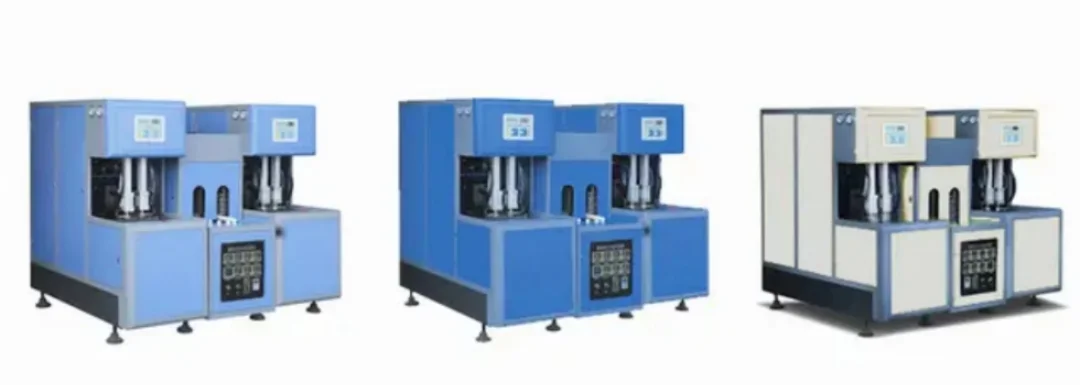
Semi-Automatic PET Bottle Blowing Machine
Typical configuration for small-to-medium production lines — suitable for water, beverage, and oil bottles
Screening Criteria
All suppliers were evaluated against the following strict requirements:
Mandatory Requirements
- Company age must exceed 5 years on Alibaba.com
- Must be a verified manufacturer/factory — not a trading company
- Must have proven export experience to Africa, particularly Central African Republic (CF)
- Must hold relevant certifications (CE, ISO 9001, etc.)
- Must have positive transaction records and review scores
Top 5 Verified Suppliers
Ranked by combined score of factory capability, export experience, certifications, and Africa market presence.
1
Taizhou Baoge Machinery Co., Ltd.
Verified ManufacturerEstablished
9 Years
Location
Zhejiang, China
Annual Revenue
US$2.5M – US$5M
Reorder Rate
45.45%
Certifications
CE, RoHS
Staff
20+ employees
Key Advantages
- 45.45% reorder rate: Exceptionally high — nearly half of customers return for repeat orders, indicating outstanding product quality and service
- Perfect 5.0/5 review score: Based on 36 reviews — one of the most reviewed suppliers in this category
- Specialized blowing machine manufacturer: Core products include blow molding machines, molds, air compressors, chillers — dedicated to the bottle production ecosystem
- 9 years on Alibaba: Established and stable supplier with proven platform track record
- US$1.1M+ in transactions: Strong order volume demonstrating active international business
- CE & RoHS certified: Meets European safety and environmental standards
- South America (30%) + Southeast Asia (20%) focus: Experienced in exporting to emerging markets with similar challenges to Africa
Key Product: PET Bottle Blowing Machine & Complete Blowing Line — Search Products
2
Ningbo Haijiang Machinery Manufacturing Co., Ltd.
Verified SupplierEstablished
17 Years
Location
Zhejiang, China
Annual Revenue
US$10M – US$50M
On-time Delivery
100%
Certifications
ISO 9001
Staff
40+ employees
Key Advantages
- Highest revenue bracket: US$10M–$50M annual revenue — the largest among all screened suppliers
- 17 years on Alibaba: Demonstrates long-term platform presence and stability
- Diverse product portfolio: Injection molding machines, blow molding machines, and auxiliary equipment — one-stop solution
- ISO 9001 certified: Quality management system in place
- Strong domestic & international presence: 50% domestic, 20% Middle East, 15% Southeast Asia exports
Key Product: Plastic Injection Molding Machine & Blow Molding Machine — Search Products
3
Zhangjiagang Apollo Machinery Co., Ltd.
Verified SupplierEstablished
18 Years
Location
Jiangsu, China
Annual Revenue
US$10M – US$50M
Response Time
≤ 15 hours
Main Products
Blow Molding Machines
Africa Markets
ET, GH, KE, NG (Ethiopia, Ghana, Kenya, Nigeria)
Key Advantages
- 18 years established: Tied for longest-standing supplier in the screening pool
- High revenue: US$10M–$50M revenue bracket — large-scale manufacturer
- Proven Africa exports: Documented shipments to Ethiopia, Ghana, Kenya, Nigeria, and more
- Specialized focus: Core competency in blow molding machines — not a generalist supplier
- Zhangjiagang industrial cluster: Located in China's leading beverage machinery manufacturing hub
Key Product: Blow Molding Machine — Search Products
4
SUZHOU YUDA ROBOT CO., LTD.
Verified SupplierEstablished
14 Years
Location
Jiangsu, China
Annual Revenue
US$1M – US$2.5M
Reorder Rate
50%
Certifications
ISO 9001, CE
Staff
70+ employees
Key Advantages
- 50% reorder rate: Highest among all screened suppliers — indicates strong customer satisfaction
- 15% Africa export share: Documented export presence to African markets
- 70+ staff: Substantial team size for technical support and after-sales service
- Dual certified: Both ISO 9001 and CE certifications
- Comprehensive product line: Plastic blowing machines, air compressors, bottle cutting machines — full ecosystem
- 5.0/5 review score: Perfect customer rating
Key Product: Plastic Blowing Machine & Air Compressor — Search Products
5
Aman Industry Co., Ltd.
Verified SupplierEstablished
15 Years
Location
Jiangsu, China
Annual Revenue
US$2.5M – US$5M
On-time Delivery
100%
Main Products
Injection Stretch Blow Molding Machine, PET Bottles
Global Reach
20+ countries including BD, ID, NG, SA, PK, KE, etc.
Key Advantages
- 15 years established: Long-standing Alibaba supplier with proven track record
- Specialized in ISBM technology: Injection Stretch Blow Molding — higher quality bottle production compared to standard stretch blow molding
- Diversified export portfolio: Exports to Bangladesh, Indonesia, Nigeria, Saudi Arabia, Pakistan, Kenya, and many more
- 100% on-time delivery: Consistent shipping reliability
- End-to-end solutions: Capable of providing both machines and PET bottles
Key Product: Injection Stretch Blow Molding Machine — Search Products
Quick Comparison Table
Side-by-side comparison of all 5 top suppliers.
| Supplier | Years | Revenue | Certifications | Africa Export | Reorder Rate | Delivery |
|---|---|---|---|---|---|---|
| Baoge Machinery | 9 yrs | $2.5M–$5M | CE, RoHS | South America, SEA | 45.45% | 98% |
| Haijiang | 17 yrs | $10M–$50M | ISO 9001 | Yes (Mid East, SEA) | — | 100% |
| Apollo | 18 yrs | $10M–$50M | — | ET, GH, KE, NG | — | — |
| Yuda Robot | 14 yrs | $1M–$2.5M | ISO 9001, CE | 15% share | 50% | 100% |
| Aman Industry | 15 yrs | $2.5M–$5M | — | NG, KE, etc. | — | 100% |
Procurement Guide: Pitfalls & Key Considerations for African Buyers
⚠ (a) Certification Requirements
Pitfall: CE certification may not be sufficient for your country
How to avoid: Verify which certifications your local customs authority requires. For Central African Republic, check if SONCAP (Nigeria), PVOC (Kenya), or other country-specific pre-export verification of conformity (PVoC) applies. Always request the original certificate, not just a copy, and verify its validity on the issuing body's website.
Pitfall: Supplier provides expired or forged certificates
How to avoid: Cross-check certificate numbers with the certification body (e.g., SGS, TÜV, Bureau Veritas). Ask for the certificate issue date and expiry date. Prefer suppliers with ISO 9001 in addition to CE, as this indicates a managed quality system.
Pitfall: Machine does not meet local voltage/frequency standards
How to avoid: Central African Republic uses 220V/50Hz. Confirm the machine's electrical specifications match your local grid. Request a voltage compatibility certificate or test report from the manufacturer before shipping.
⚠ (b) Customs Clearance Pitfalls
Pitfall: Incorrect HS code classification leading to higher duties
How to avoid: The correct HS code for bottle blowing machines is typically 8477.30 (Blow molding machines). Confirm with your customs broker in Bangui before the supplier ships. An incorrect code can result in penalties, delays, or overpayment of duties.
Pitfall: Missing or incomplete documentation causing port delays
How to avoid: Ensure the supplier provides: (1) Commercial Invoice, (2) Packing List, (3) Bill of Lading, (4) Certificate of Origin (Form A for potential duty benefits under certain trade agreements), (5) Insurance Certificate. Verify all documents match exactly — even minor discrepancies can cause customs holds.
Pitfall: Central African Republic import restrictions and bureaucratic delays
How to avoid: CAR has limited port infrastructure. Most goods arrive via Douala (Cameroon) or Pointe-Noire (Congo) and are transported overland. Pre-register your import with CAR customs authorities. Budget extra time (2–4 weeks) for overland transit from the port of entry to Bangui. Work with a freight forwarder experienced in CAR logistics.
Pitfall: Undervaluation by supplier causing customs suspicion
How to avoid: Some suppliers may under-declare invoice value to "help" with duties. This is illegal and can result in seizure of goods, fines, or blacklisting. Insist on truthful declaration and ensure the declared value matches your payment records.
⚠ (c) Transportation Pitfalls
Pitfall: Overland transport from Douala to Bangui is risky and slow
How to avoid: The Douala–Bangui route is approximately 1,200km with variable road conditions. Use established freight forwarders with CAR experience. Budget $2,000–$5,000+ for overland transport depending on cargo size. Insurance is essential — goods in transit are vulnerable to damage and theft.
Pitfall: Machine damage during sea + land transit
How to avoid: Require the supplier to use: (1) Wooden crate packaging with moisture-proof lining, (2) Foam padding around sensitive components (PLC panels, motors), (3) Desiccant packs inside the crate. Request photos of the packaging before dispatch. Purchase marine cargo insurance covering the full door-to-door journey.
Pitfall: Incomplete Incoterms understanding
How to avoid: Clarify Incoterms before payment. FOB means the supplier delivers to the Chinese port — you handle ocean freight and onward. CIF means the supplier arranges ocean freight to the destination port — but overland to Bangui is still your responsibility. DDP is rarely available for CAR. Recommend FOB or CIF Douala for this route.
Pitfall: Shipping heavy machinery in standard containers without proper securing
How to avoid: Bottle blowing machines are heavy (500kg–3,000kg+). Ensure the supplier properly secures the machine inside the container using chains, straps, and blocking. Request loading photos. For machines exceeding container dimensions, use Open Top or Flat Rack containers.
⚠ (d) Product Inspection Pitfalls
Pitfall: Receiving machines with missing or wrong components
How to avoid: Before shipping, request a detailed packing list with photos of all components. Use a third-party inspection service (e.g., SGS, QIMA, V-Trust) for a pre-shipment inspection at the factory ($200–$500). Verify: mold cavity count matches order, motor brand/spec matches contract, PLC brand (e.g., Siemens, Mitsubishi) matches specification, all auxiliary equipment (compressor, chiller, conveyor) is included.
Pitfall: Machine performance does not match advertised specifications
How to avoid: Request a live video demonstration of the machine running at the factory before shipment. Ask the supplier to produce sample bottles using your specific preform and send them to you for quality inspection. Include performance clauses in the contract: output rate (bottles/hour), defect rate, power consumption. Specify these as acceptance criteria.
Pitfall: Low-quality core components (motors, PLCs, pneumatic parts)
How to avoid: Specify brand requirements in the contract for key components: Siemens/Mitsubishi for PLC, Schneider/ABB for electrical components, SMC/Festo for pneumatic parts. Cheap generic alternatives fail frequently and are hard to replace in Africa. The extra $500–$1,500 for branded components is worth it for reliability.
Pitfall: No after-sales support or spare parts availability
How to avoid: Before ordering, confirm: (1) Does the supplier offer remote technical support via video call? (2) Can they provide English operation manuals? (3) Do they include a spare parts kit (heating elements, seals, O-rings, valves)? (4) What is the warranty period (typically 12–18 months)? (5) Can they send a technician to Africa for installation? Negotiate these terms into the contract before payment.
Pitfall: Mold incompatibility with your preform supplier
How to avoid: Bottle molds are specific to the bottle design and neck finish type (e.g., 28mm PCO 1881, 29/2100). Provide your exact preform specifications to the supplier and request mold design confirmation before production. If you plan to produce multiple bottle types, negotiate a multi-cavity mold or additional mold cavities upfront.